

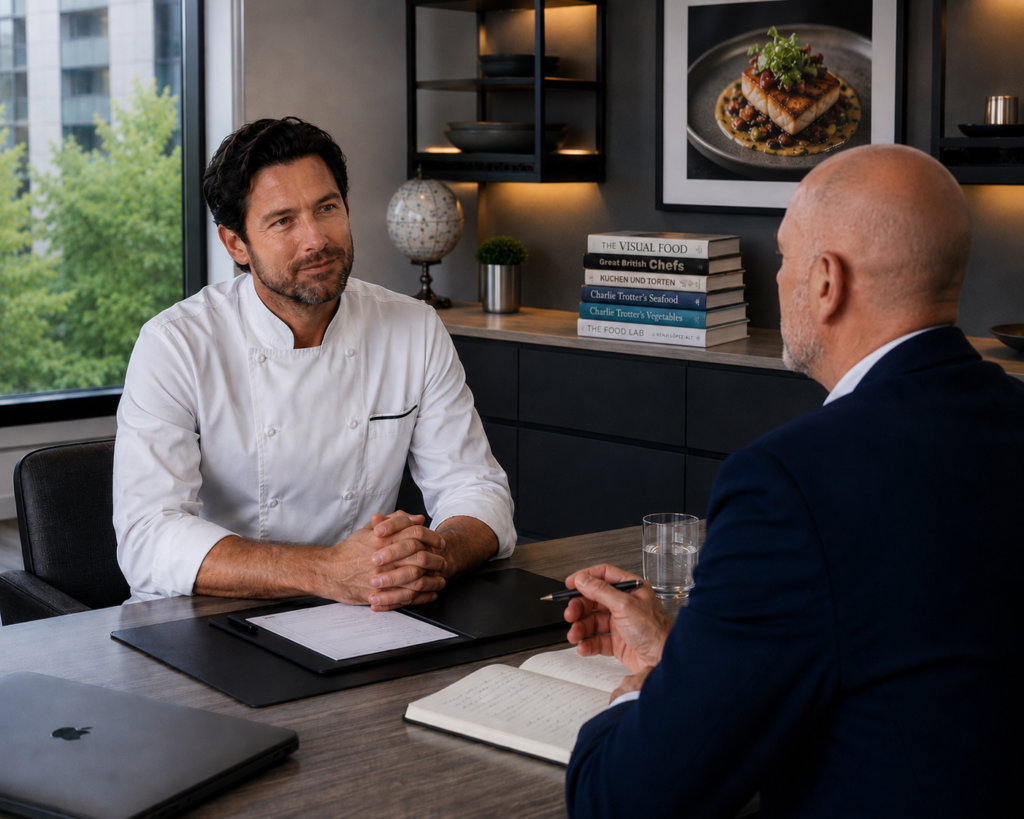
Your cooking gets you the meeting. Your professional protocol gets you the job. In more than 30 years of placing private chefs in estates from Beverly Hills to Manhattan, we have watched gifted cooks lose offers before they ever turned on a burner, and we have watched composed, well-prepared candidates win a trial in a single conversation. The first interview is not about food. It is about chemistry, trust, discretion, and whether a household believes you have the temperament to work inside their home for years. This is what actually happens in that room, what the Principal is measuring, and what both sides owe each other.
Presentation Starts the Moment You Walk Through the Door
The interview begins before you speak. Punctuality is the first test of reliability, so always arrive a few minutes early. Late tells a household everything it needs to know about how you will treat a dinner service or a scheduled event.
Attire signals respect for the position. If you do not dress with respect for the role, the household will not trust you with the household.
- No jeans, no sneakers, nothing too casual.
- Black pants with a crisp, clean chef jacket, or professional business attire.
- Clean, pressed, and understated. You are presenting as the person who will run a private culinary estate.
What the Principal Is Really Measuring
A household interviewing a private chef is not hiring a personality. They are hiring a long-term partner who will integrate into an existing staff and make their life easier. That single idea drives almost every judgment made in the room.
Listen More Than You Talk
During the interview, your most important tool is your ability to listen. Pay close attention to the questions being asked. You do not need to flood the interviewer with questions to seem engaged. Be ready to speak in detail about your background and your specific culinary expertise, then focus on giving thoughtful, well-researched answers rather than dominating the conversation.
Composure Over a Big Personality
Households are looking for a low-key team player. This is not the place for a big personality or a Michelin-star chip on your shoulder. They want a chef who is operationally sharp, composed, and humble. The candidate who shows the most willingness to adapt is the one who gets the trial.
The Red Flags That End Interviews Early
Some answers quietly disqualify a candidate even when the cooking pedigree is strong. A major red flag for a Principal is any signal that the chef’s focus is divided.
- Side projects. Do not talk about consulting work or other ventures. If you mention a side hustle, the client will rightfully assume you are not fully committed to their home.
- Restaurant dreams. Never mention plans to open your own restaurant. They are looking for someone to lead their culinary estate, not someone using the position as a temporary stepping stone.
- Name-dropping. If you are asked about a specific name on your resume, keep your answers strictly professional. Never divulge details about a former household’s lifestyle. Discretion is your most valuable currency.
Discretion is not a soft skill in this work. It is the foundation of trust between a Principal and the staff who move through their private life. The way you talk about a past employer is exactly how a prospective employer expects you to talk about them later.
Salary, Scope, and the Questions You Do Not Ask
You can ask pertinent questions about the household’s culinary needs. You should not bring up salary in the first interview. When you work with an agency like Private Chefs Inc., the salary range is already established and shared with you beforehand, which removes the most awkward part of the conversation from the room entirely.
When You Do Not Know the Answer
If a question arises that you are not sure how to answer, simply say, “Let me get back to you on that.” Then call us as your agent so we can coordinate a professional, considered response. There is no penalty for taking a question offline. There is a real penalty for improvising a commitment you cannot keep.
When the Brief Changes in the Room
In rare cases, the job description you were given may not match what the interviewer describes. If the brief was for lunch and dinner but they suddenly mention breakfast, do not get emotional or defensive. Stay professional and leave the door open. Even if you feel the role is not a match, you do not say that in the room. After the interview, call us. As your agent, our job is to find solutions through diplomacy and to handle that conversation on your behalf. This is the same diplomacy that human resources professionals are trained to apply when a role and a candidate need realignment, a discipline detailed by the Society for Human Resource Management in its guidance on structured hiring.
The Interview Goes Both Ways
This is not an interrogation in one direction. You are also there to get a feel for the household and to confirm you are genuinely interested in the role. A placement only works when the chef wants the seat as much as the household wants the chef.
Relocation Requires a Commitment From the Whole Family
If relocation is involved, speak with your spouse or partner beforehand and make sure they are fully on board. You do not want to get halfway through the process only for your family to decide they do not actually want to move to that city or state. At this level of service, no one can afford to waste the client’s time and money, or your own, on a move that has not been fully vetted at home. A successful placement requires a commitment from the whole family.
Understand Who Adapts to Whom
One rule governs this entire profession, and it is worth stating plainly: the client will never adjust their lifestyle to meet your needs. Do not enter an interview trying to convince a Principal that they need a second chef, or that you cannot work weekends. You are there to make their life easier, not to create friction.
That does not make you powerless. It makes your role clear. The chef who arrives prepared, listens carefully, protects past employers, and demonstrates genuine willingness to adapt is the one who advances to the trial. Adaptability, in this setting, is not weakness. It is the most persuasive credential you have.
The Takeaway
The initial interview is about chemistry, trust, and service. Show a household that you are a professional, adaptable partner who understands the weight of discretion, and the kitchen will be your next stop. Arrive early, dress with respect, listen closely, keep side projects and salary out of the conversation, and protect every name from your past. Let your agent handle scope changes and difficult questions through diplomacy.
Whether the estate is in Beverly Hills or Manhattan, our team is ready to prepare you for the room and to advocate for you in it. Connect with Private Chefs Inc. to learn how our gold standard placement process turns a strong first interview into a long-term position.
