

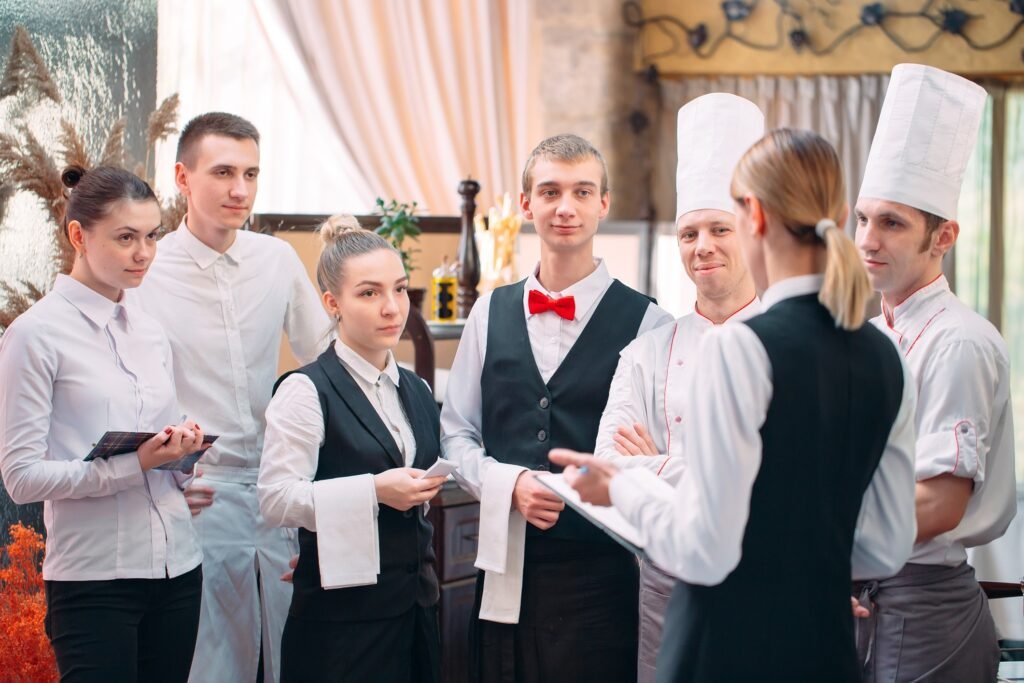
Why Teamwork Defines a Great Private Chef
In an elite household, the difference between a good private chef and an exceptional one rarely comes down to cooking alone. Private chef teamwork is the quiet engine behind every seamless dinner party, every flawless family meal, and every smoothly run estate. Being a team player as a private chef means understanding that you are one essential part of a larger, highly coordinated household ecosystem, and that your success depends on how well you collaborate with the people around you. At Private Chefs Inc. (PCI), with 30 years of experience placing chefs into ultra-high-net-worth (UHNW) estates accross the markets like Palm Beach, New York and nationwide, we have learned that culinary brilliance only shines when it is paired with collaboration, communication, and discretion.
The most talented chef in the world will struggle in a private estate if they cannot work alongside estate managers, house managers, butlers, Housekeepers, nannies, and personal assistants. Below, we break down exactly how a private chef fits into the household, and why being a true team player elevates everything.
The Estate Staff Ecosystem and Where the Chef Fits
A fully staffed UHNW estate operates much like a small, sophisticated organization. Each role has a clear function, yet every function overlaps. Understanding this structure is the first step toward effective collaboration.
Key Household Roles
- Estate manager: Oversees the entire property, budgets, vendors, and staff. Often the chef’s direct point of contact for logistics.
- House manager: Manages the day-to-day running of the residence and interior operations.
- Butler: Handles formal service, table settings, and front-of-house elegance during meals and events.
- Personal assistants: Coordinate the principals’ schedules, travel, and last-minute requests.
- Nannies and housekeepers: Care for children and maintain the home, often with specific dietary or timing needs.
The private chef sits at the intersection of nutrition, hospitality, and daily rhythm. Meals shape the schedule of the entire household, which means the chef must stay in constant, respectful dialogue with everyone. A chef who treats the kitchen as an isolated kingdom creates friction; a chef who sees the kitchen as a hub of collaboration becomes indispensable.
Communicating With the Estate Manager and Principals
Clear communication is the foundation of household staff collaboration. In most estates, the chef reports primarily to the estate manager or house manager, who acts as the bridge between staff and the family. Knowing the chain of command, and respecting it, prevents confusion and protects the principals’ time.
With the Estate or House Manager
The relationship between a private chef and estate manager is one of the most important in the home. The estate manager relies on the chef for accurate grocery budgets, event timelines, and staffing needs, while the chef depends on the manager for scheduling, household calendars, and family preferences. Daily or weekly check-ins keep both aligned and prevent surprises. This tight syncronisation mirrors the professional standards advocated by leading industry groups like The Esate Manager Network amd the Private Service Alliance.
With the Principals
Direct communication with the family must be warm, concise, and discreet. The best chefs learn to read preferences without being intrusive, confirm menus efficiently, and never burden the principals with operational details that staff should handle. Strong private chef communication means knowing when to speak, when to listen, and when to simply deliver.
Coordinating With Other Staff for Events
Large events are where teamwork is tested most. A dinner for twenty, a holiday gathering, or a weekend with houseguests requires the chef to orchestrate timing with butlers, servers, and house managers down to the minute.
Successful events depend on the chef sharing menus and timelines early, communicating dietary restrictions to service staff, coordinating courses with butlers, and aligning with the estate manager on vendors and rentals. When a private chef working with estate staff approaches an event as a shared mission rather than a solo performance, the result is effortless elegance that guests never see the work behind.
Anticipating Needs Before They Arise
The hallmark of an elite private chef is anticipation. Team players do not wait to be told; they observe patterns, learn family rhythms, and prepare proactively. This might mean stocking a principal’s favorite snack before a long flight, adjusting meal timing around a child’s school schedule, or quietly preparing for unexpected guests because the personal assistant mentioned a possibility in passing.
Anticipation only works through collaboration. The information a chef needs lives across the household, shared in passing by assistants, nannies, and managers. Chefs who listen, build rapport, and stay engaged with their colleagues gain the awareness that makes service feel almost effortless.
Conflict Resolution and Professional Boundaries
Even in the best households, friction happens. Long hours, high standards, and close quarters can create tension. What separates professionals is how they handle it. A team-oriented chef addresses concerns privately and calmly, never in front of the principals or other staff, and brings issues to the estate manager when resolution requires it.
Equally important are professional boundaries. Respecting each colleague’s domain, avoiding gossip, and maintaining a composed demeanor protect both the chef’s reputation and the household’s harmony. Boundaries are not barriers to teamwork; they are the structure that makes healthy collaboration possible.
How Collaboration Protects Discretion and Elevates Service
Discretion is non-negotiable in UHNW homes, and collaboration is what protects it. A unified staff that trusts one another keeps private matters private. When the team communicates well, sensitive information flows only where it must, and the family’s privacy remains intact. A chef who is a reliable team player becomes a trusted insider rather than a potential liability.
Collaboration elevates the entire guest and family experience. Meals arrive on time, service is seamless, preferences are honored, and the household runs with quiet confidence. This is the standard PCI looks for in every placement, and it is reinforced through our vetting process, which evaluates not only culinary skill but temperament, communication, and the ability to thrive within a team.
Collaboration Best Practices for Private Chefs
- Know the chain of command and respect each colleague’s role and authority.
- Communicate early and often with the estate manager about menus, budgets, and timelines.
- Share dietary and event details with service staff well before guests arrive.
- Listen actively to assistants and nannies to anticipate family needs.
- Keep the kitchen organized and clean as a courtesy to colleagues who share the space.
- Handle conflict privately and bring unresolved issues to the appropriate manager.
- Protect discretion by never discussing the family or sensitive details outside the household.
- Stay flexible when schedules shift, guests arrive, or plans change at the last minute.
These habits are precisely what top estates expect, and they are why so many of our chefs build long, rewarding careers. If you are an experienced chef seeking a collaborative, high-caliber environment, explore current private chef jobs with PCI.
Frequently Asked Questions
Do private chefs work with other household staff?
Yes. In a fully staffed UHNW estate, a private chef works closely with estate managers, house managers, butlers, personal assistants, nannies, and housekeepers every day. Meals shape the household schedule, so collaboration with the broader team is essential to smooth, seamless service.
Who does a private chef report to?
In most elite households, a private chef reports primarily to the estate manager or house manager, who serves as the bridge between staff and the principals. The chef may also receive direct preferences from the family, but logistics and scheduling typically flow through household management.
Why is teamwork important for a private chef?
Teamwork ensures that meals, events, and daily routines run without friction. A private chef who collaborates well with estate staff protects the family’s discretion, anticipates needs more effectively, and delivers a higher level of service than culinary skill alone could ever achieve.
How do private chefs coordinate large events?
Private chefs coordinate large events by sharing menus and timelines early, communicating dietary restrictions to service staff, aligning course timing with butlers and servers, and working with the estate manager on vendors and rentals. Early, detailed communication is the key to flawless execution.
What makes a private chef a good team player?
A good team player respects the chain of command, communicates clearly, anticipates needs, handles conflict with professionalism, maintains boundaries, and protects the household’s privacy. These qualities are central to private chef placement success in elite estates.
Find a Chef Who Elevates the Whole Household
Ready to find a private chef who is also an exceptional team player, or seeking your next role in an elite estate? For 30 years, Private Chefs Inc. has connected UHNW households with chefs who combine culinary mastery and seamless collaboration. Call us today at (800) 921-2433 to start the conversation and experience the PCI difference.
