

Working as a private chef in a Malibu household with young children changes the shape of the job. The principal is still the center of the placement, but the children are a vital part of daily life, and feeding them well demands a specific set of professional standards. After more than 30 years placing chefs in private estates, we can say plainly that the families who request this work are looking for someone who treats children’s nutrition with the same care given to a formal dinner service. The chef who understands that becomes indispensable. The chef who treats kids’ meals as an afterthought rarely lasts.
Why the kitchen becomes a gathering place
Children are naturally curious, and in a private estate they tend to gravitate toward the kitchen. The food, the smells, and the activity draw them in. A chef who is patient and welcoming turns that presence into an asset rather than an interruption. This matters for the placement itself. Parents notice how a chef responds to their children, and a warm, calm presence in the kitchen builds the kind of trust that supports a long-term position.
Embracing that curiosity is a professional decision, not just a personality trait. When children feel comfortable around the chef, mealtimes become easier, new foods are accepted more readily, and the household runs more smoothly. The chef who fosters a relationship built on respect with the youngest members of the family earns a reputation that extends well beyond the menu.
Quality ingredients behind familiar favorites
The clients who hire for these roles are well-informed about early nutrition. They want their children eating organic, farm-fresh, and wholesome food from the start. The challenge is that children still want what children want, and that means the favorites stay on the menu. The skill is rebuilding those favorites with better ingredients.
Reworking the classics
Macaroni and cheese and pizza do not have to be compromises. A chef working at this level makes them both nutritious and delicious by controlling what goes in:
- Macaroni and cheese built from real cheese and whole-grain or vegetable-forward pasta rather than packaged mixes.
- Pizza on house-made dough with a fresh tomato base and vegetables worked into something a child will actually eat.
- Snacks and sides that lean on whole, recognizable ingredients instead of processed shortcuts.
The goal is consistent. Take the foods children love and make them wholesome enough that parents never have to choose between what their kids enjoy and what is good for them.
Involving children builds healthy habits
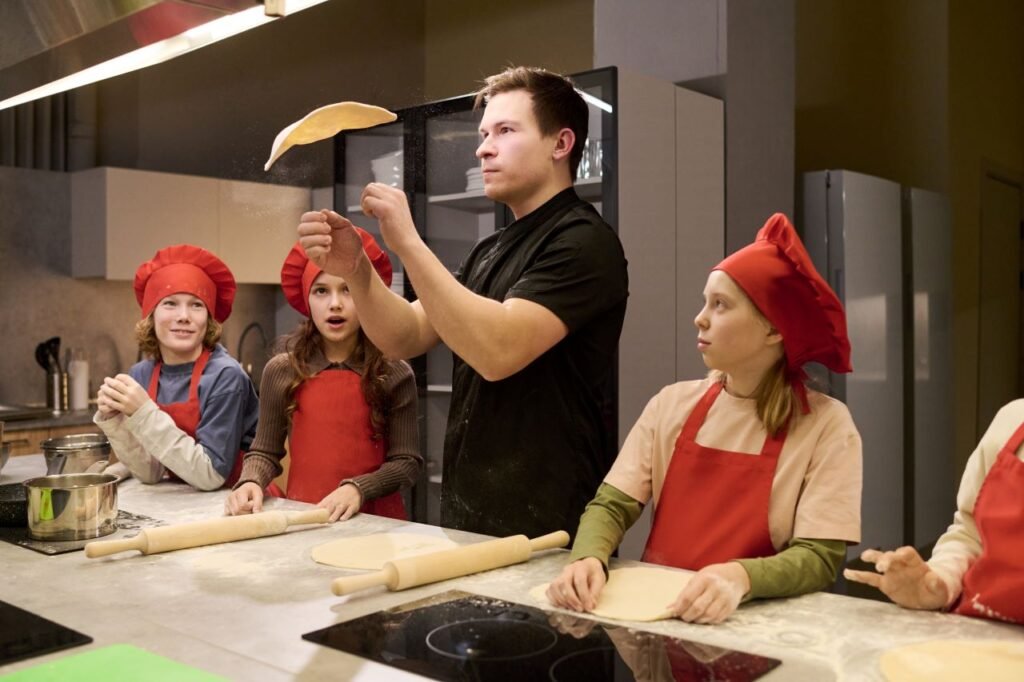
One of the most effective tools a private chef has is the child’s own participation. Including children in simple kitchen activities, like baking or light meal prep, teaches them to respect where food comes from and encourages them to try new things. A child who helped knead the dough is far more likely to taste the result.
When you bring children into the decision-making process, the role shifts. You are not only cooking for them, you are helping them develop their own palate. That is the difference between a chef and a mentor. For picky eaters in particular, this approach does more than any amount of negotiation at the table. A child who chose the vegetable, washed it, and watched it cook has a stake in the meal.
Age-appropriate participation
- Toddlers can stir, rinse produce, and tear herbs or lettuce under supervision.
- Young children can measure, mix, and help assemble simple dishes.
- Older children can take on light prep and contribute ideas to the week’s menu.
Beyond the home table
The job does not end at the family dining room. Providing high-quality school lunches and healthy snacks is an essential part of the role, and it carries its own standards. Presentation matters even inside a lunchbox. Food that looks appealing gets eaten, and a thoughtfully packed lunch reflects on the household as much as a dinner does.
Infants and toddlers
For households with the youngest children, the work extends to preparing soft, easy-to-eat meals and following specific dietary guidelines provided by the parents or the nanny. This is a collaborative part of the job. The chef takes direction from the family and the childcare staff, then executes it precisely. There is no improvising with an infant’s feeding schedule or texture requirements.
Allergies and dietary restrictions: zero room for error
The most critical responsibility in any household with children is managing allergies and dietary restrictions. Within an estate, the chef is the gatekeeper. This means educating yourself thoroughly on every sensitivity in the home and ensuring that restricted ingredients are kept entirely separate and out of reach. There is zero room for error where the safety of the family is concerned.
That responsibility starts with knowledge. A professional chef in this setting understands cross-contamination, reads every label, and knows how a reaction presents. Families managing food allergies often rely on resources such as Food Allergy Research and Education to stay current, and the chef should be conversant in the same standards the parents follow at home.
Practical safeguards in the estate kitchen
- Documented restrictions for every child, confirmed directly with the parents.
- Separate storage and prep so restricted ingredients never touch safe food.
- Clear labeling on prepared meals, especially school lunches that leave the house.
- Communication with nannies and family members so everyone shares the same information.
This is the part of the job where a chef’s professionalism is most visible. Parents are entrusting the safety of their children, and that trust is earned through discipline, not assurances.
The blend that makes it work
Working with children in the kitchen requires patience, flexibility, and a friendly approach held together by the high standards of the estate. The chef has to be a calm, welcoming presence in the children’s lives while never lowering the quality of the work. Those two things are not in conflict. The best chefs in family households make warmth and rigor look like the same thing.
When a chef bridges that gap, the result is a position that lasts. The children look forward to meals, the parents trust the kitchen completely, and the chef becomes a genuine part of the family’s daily life. If you are a family seeking a chef who can meet these standards, or a chef ready for this kind of placement, reach out to our placement team to start the conversation.
The takeaway
Cooking for families with children is its own discipline within private service. It rewards the chef who treats kids’ nutrition seriously, rebuilds the favorites with real ingredients, brings children into the process, and guards against allergies without exception. Do those things consistently and you stop being the person who makes the meals. You become indispensable.
